

Jay, Author at Premium eCommerce marketing services

EOFY Playbook: Why Retention Will Out-Earn Acquisition for AU Ecommerce in FY27

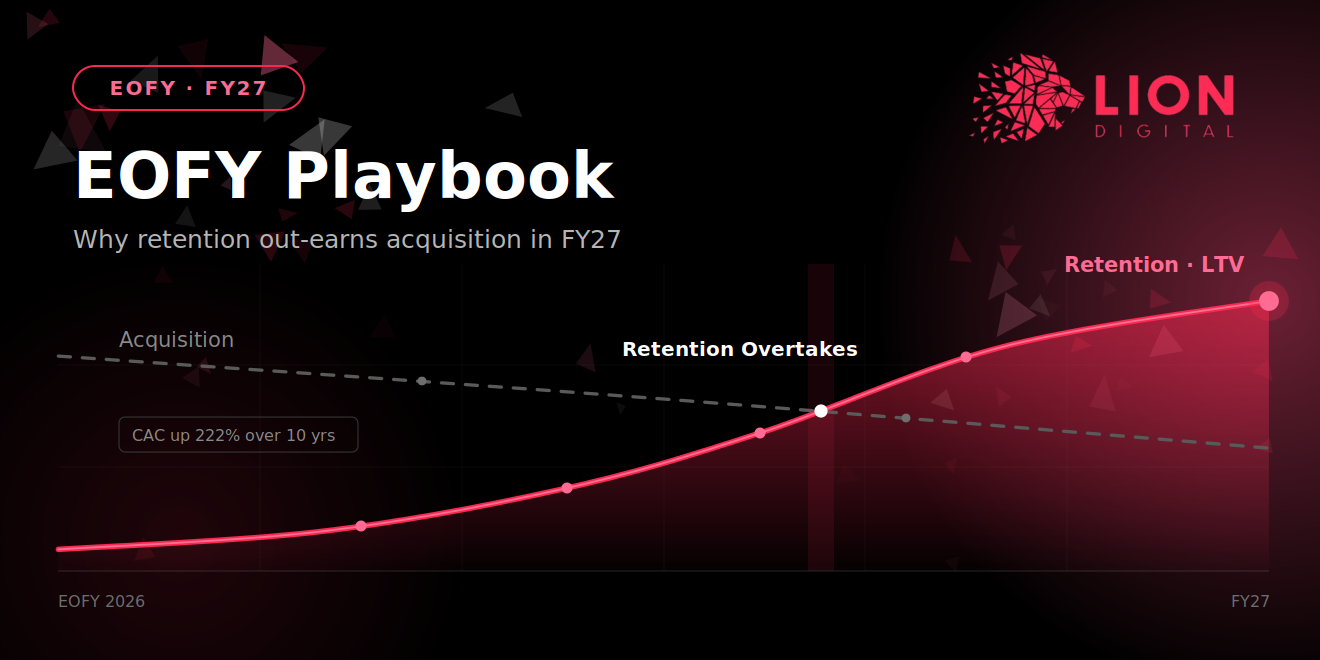
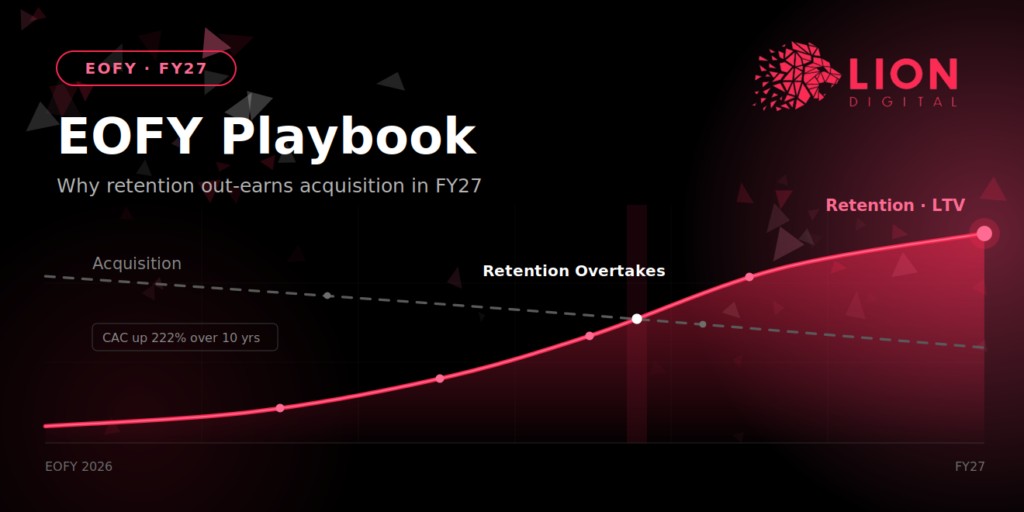
EOFY (End of Financial Year) is the most important sales window on the Australian retail calendar, second only to Black Friday. For established eCommerce brands, the playbook is familiar – more budget pushed into Google and Meta, deeper discounts to move volume, aggressive top-of-funnel pushes to hit revenue targets before June 30. It works. The numbers look great for about three weeks. The problem shows up in Q1. The customers acquired during the sale don’t come back

The Australian eCommerce market has changed significantly, with shoppers spending less and buying from more brands than ever. To grow profitably in FY27, EOFY needs to be the start of a retention relationship, not just an acquisition event. This article will uncover reliable eCommerce customer retention strategies to help you grow and thrive. From email marketing and SMS automation to CRM and loyalty programs, the tools exist; the question is whether they’re being used to their full potential. 

The Real State of Australian Retail Right Now

Australian online retail is in a strange place right now. The headline numbers look fine; total online spend hit $82.6 billion in 2025, up 14% year-on-year. But dig beneath that figure, and you find that real spending per person is going backwards, and more of that growth is going to Temu, Shein, and Amazon.

Power Retail’s Head of Data & AI, David Fear, put it plainly in late 2025: Australia is already in a “hidden retail recession”. Revenue looks fine because of inflation and population growth. But when you strip those out, per-capita sales volumes are falling. 

The ABS data confirms it. In real terms, many categories are barely growing or contracting.

The only sector posting the biggest growth is non-store retailing (dominated by international platforms Temu, Shein, and Amazon), up 23% year-on-year. Traditional store-based retail: well below the 3.2% inflation benchmark in most categories.

That’s part of the problem. The Australia Post eCommerce Report 2026 says that basket sizes are getting smaller. The average Australian online basket now sits at $96, down nearly $10 from 2020. Plus, most Australian households now shop from 16 different online brands per year. 81% actively hunt for the best deal. 73% wait for sale events before buying. 96% of Gen Z hold out specifically for Black Friday. It’s a pattern that shows up in the sales data too. Shopify merchants globally hit a record $14.6 billion in BFCM 2025 sales (up 27% year on year) with Australia ranking as one of the top five selling countries on the platform. 

It means that Australian eCommerce brands cannot rely on the average order value rising to cover acquisition costs. If you’re spending to bring in new customers and their baskets are getting smaller, your unit economics get worse every year.

Customer Acquisition vs Retention

Running paid acquisition to fill the top of the funnel will always be part of growth – EOFY is one of the best times of year to do it, with the highest shopper intent of the calendar. The problem isn’t the customer acquisition strategy itself. It’s the lack of a retention system behind it and the missed opportunity to reduce customer acquisition costs over time by making each customer more valuable.

According to Klaviyo’s Q1 2026 Commerce Trends Report, brands are spending more to win first-time customers – new buyer discount rates rose a full percentage point year on year – while simultaneously pulling back on promotions for existing customers. Acquisition is getting more expensive. The economics of retention have never been stronger. For established eCommerce brands, owned media – email, SMS, CRM, and loyalty programs – is the highest-leverage response to rising acquisition costs. It’s the channel mix you control, and the one that compounds in value over time rather than inflating with every ad auction. Yet the average repeat purchase rate sits well below 50%. Most customers you acquire make only one purchase and never return. 

The probability of selling to a new prospect is only 5-20%, while for an existing customer, it is 60-70%. 

This is the core acquisition vs retention equation – and it’s why the brands that win EOFY focus on the customers they already have, working on customer lifetime value ecommerce metrics rather than just top-of-funnel volume.

Why LTV is Your Most Important Number for EOFY

Let’s face it, you cannot out-price Temu or out-advertise Amazon. But you can serve your existing customers better than any global platform can. You know what they buy and when, and you can reach them at the right moment with a relevant offer. It’s your competitive advantage. You can build a relationship that makes your brand their default, and that’s where LTV comes into play.

Customer Lifetime Value (LTV or CLV) is the total revenue a customer generates for your business across their entire relationship with you. 

The basic LTV formula:

LTV = Average Order Value × Purchase Frequency × Customer Lifespan

If a customer spends an average of $120 per order, buys four times a year, and stays with your brand for two years, their LTV is $960. To improve this number, you should move each lever:

  • Increase average order value through cross-sell, upsell, or free shipping thresholds.
  • Increase purchase frequency through lifecycle email, replenishment reminders, and loyalty.
  • Extend the customer relationship through satisfaction, service, and relevance.

A 5% increase in customer retention can boost profits by 25% to 95%. That’s not a marginal optimisation – it’s a fundamental shift in ecommerce profitability that compounds across every financial year that follows.

The Customer Retention Strategies Every Australian Ecommerce Brand Needs

Email automation is the core of any retention strategy. Unlike broadcast campaigns, flows are triggered by customer behaviour – they fire automatically when a customer performs a specific action. It makes them far more relevant and far more profitable.

To make it work, you need a platform that can handle segmentation, automation, personalisation, and cross-channel messaging in one place.

Klaviyo is built specifically for eCommerce retention. It connects directly to your ShopifyBigCommerce, or WooCommerce store, pulls in purchase data and browsing behaviour, and lets you build flows triggered by any combination of customer actions. It supports email and SMS natively, so your post-purchase flow can send an email the day after purchase and an SMS reminder two weeks later, without managing two separate platforms.

Loyalty programs are another high-leverage retention tool. When structured around genuine value, free shipping thresholds, exclusive early access, and cashback rewards, they give customers a concrete reason to return rather than defaulting to whoever has the next sale. Platforms like Yotpo integrate directly with Klaviyo to connect loyalty data to your email and SMS flows, so rewards and retention work as a single system rather than two separate programs. A well-built loyalty program compounds directly into your repeat purchase rate and LTV

According to Klaviyo’s 2026 benchmark data from over 183,000 brands, automated flows generate nearly 41% of total email revenue from just 5.3% of sends. The average revenue per recipient from flows is nearly 18 times higher than from standard broadcast campaigns. The question worth asking before EOFY is not whether you have the platform. It’s whether your current setup is performing at the level it should, or whether there are gaps quietly costing you repeat-purchase revenue from customers you’ve already paid to acquire.

The FY27 Retention Playbook

There is still time to act on this. The highest-margin EOFY revenue comes from customers who already know your brand:

Before EOFY

  • Audit your current Klaviyo flows. What flows are live? Are they multi-step? Do they include SMS? Identify the gaps. Our Klaviyo Opportunity Analysis is the fastest way to find out exactly where your setup is leaving revenue on the table before EOFY ends 
  • Pull your LTV data. What is your current 12-month LTV? Repeat purchase rate? These are your baseline numbers for FY27.
  • Segment your list for the EOFY campaign. At a minimum: existing customers vs prospects, recent buyers vs lapsed, high-value vs standard.
  • Set up post-EOFY flows in advance. Build the post-purchase sequence that will activate for every EOFY transaction before the sale launches.

During EOFY

  • Lead with existing customers. Provide early access for repeat buyers and exclusive bundles for your top spenders.
  • Run win-back flows for lapsed customers. A targeted EOFY offer to customers who haven’t bought in 60-120 days. This is one of the highest-ROI uses of your EOFY budget.
  • Capture intent from browsers. Make sure browse and cart abandonment are live and optimised before the EOFY traffic peak.

Post-EOFY

  • Trigger post-purchase flows immediately. Every EOFY buyer should enter a post-purchase sequence within hours of their transaction.
  • Identify new repeat-purchase candidates. Flag every EOFY customer who was a first-time buyer. These people are your most important segment for the next 90 days.
  • Review and optimise. Pull your EOFY email performance data two weeks after the sale: open rates, click rates, revenue per recipient, repeat purchase conversion. Check out what worked and what needs changing before the next major campaign.

Build a Profitable Retention System for FY27

EOFY is two weeks away. The acquisition spend is already committed. What’s still within your control is what happens to those customers after they buy – and that’s where FY27 margin is won or lost.

The brands that will look back on this EOFY as a turning point aren’t the ones that ran the deepest discount. They’re the ones who had a retention system ready to activate the moment the sale ended.
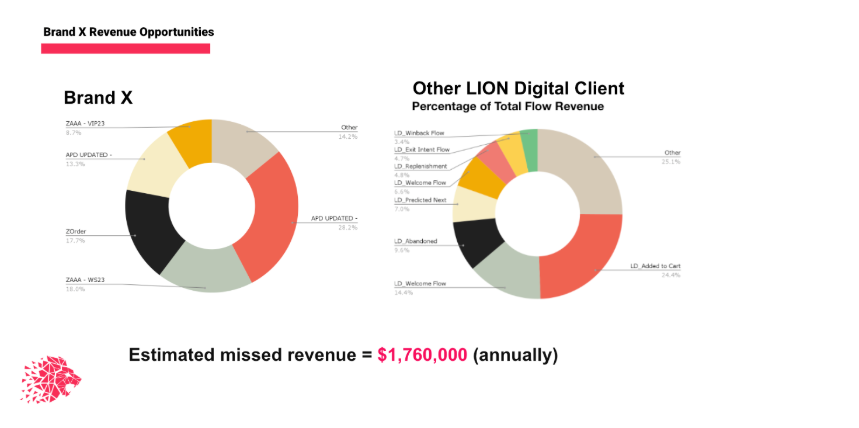
LION Digital is a Klaviyo marketing agency and Klaviyo Elite Partner working with established Australian eCommerce brands. The problem is rarely that retention hasn’t been tried — it’s that the current setup isn’t performing at the level the business deserves. We audit what exists, identify where LTV is leaking, and build the flows, segmentation, and customer retention strategies that close the gap.

If your current Klaviyo setup isn’t ready to activate the customers you’re about to acquire, our Klaviyo Growth Accelerator is the fastest path to closing that gap – with the foundations in place before EOFY ends and the full retention system running for Q1 FY27.

It includes:

  • A full 120+ point Klaviyo account audit, so everything is set up for maximum deliverability and performance.
  • Building and managing core flows, including Welcome, Abandoned Checkout, Post-Purchase, and Browse Abandonment, designed for your brand.
  • Advanced database segmentation, so every message reaches the right audience.
  • A new master email template designed for conversion and mobile optimisation.
  • Data capture and list growth strategy to feed the top of your retention funnel.
  • Expert consulting sessions to align strategy, review performance, and map your FY27 retention roadmap.

Unrivalled Performance
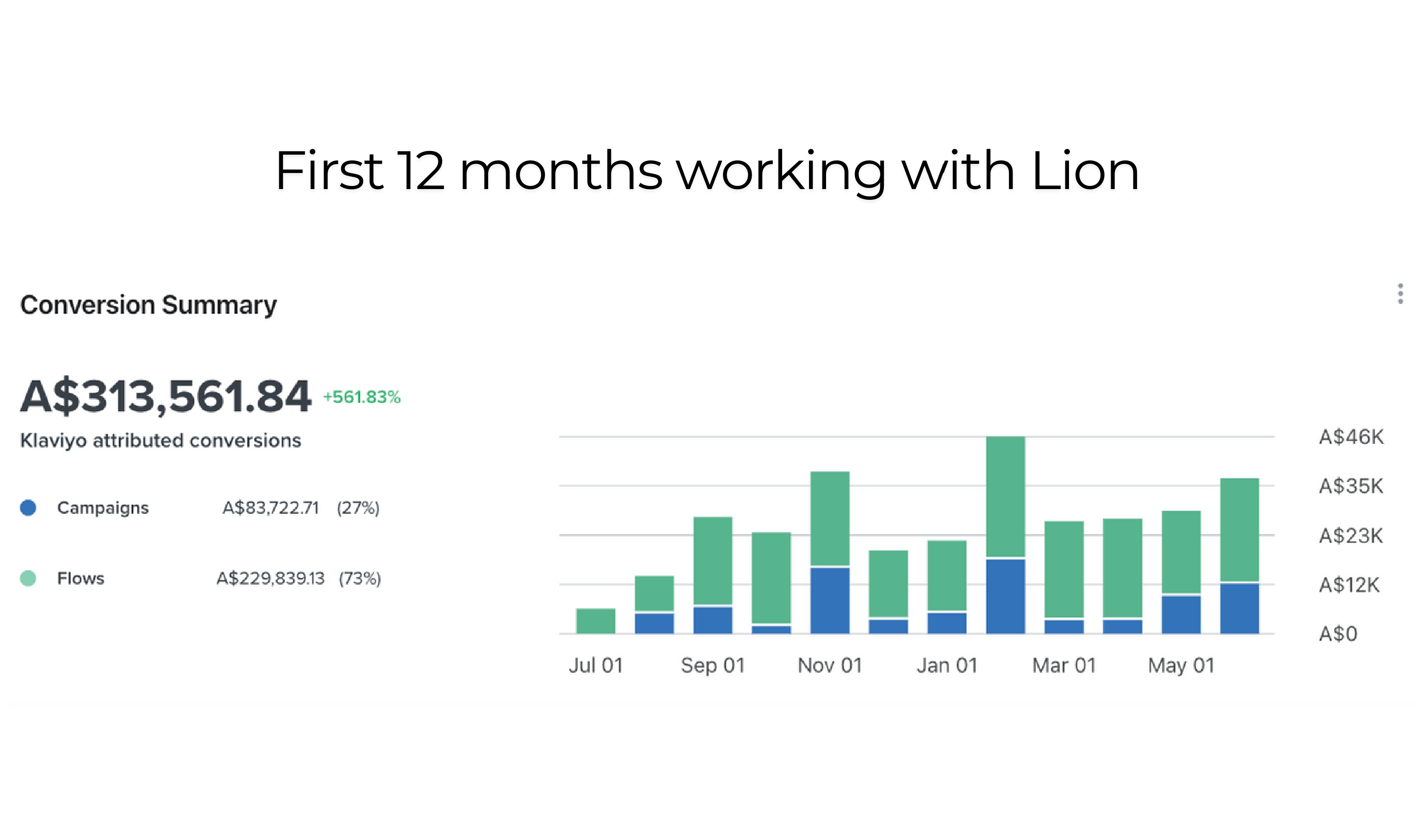
Contact us today. With two weeks until EOFY, there’s still time to make this sale the start of something – not just the end of the financial year
Ghost Stores, AI Scams, and the Fight for Consumer Trust: What Every eCommerce Founder Needs to Know

The online shopping industry is under attack, and it affects every eCommerce brand. Online ghost stores are popping up in Australia, fooling customers and damaging trust in legitimate businesses. You’re not just competing with other companies in your field anymore; you’re also fighting against fake online stores. They only exist digitally and have no real physical location or genuine business operations. Yet, they look very credible, so people can’t tell the difference, and that’s the problem. 

When shoppers lose money to fake stores, they become suspicious of ALL online retailers. In other words, website scams damage consumers’ trust in eCommerce in general. If you’re running an online business, prepare for the new challenges. It’s becoming harder and more expensive for you to acquire new customers now.

ACCC Ghost Store Warning: Disturbing News for Every eCommerce Founder

Since early 2025, the Australian Competition and Consumer Commission (ACCC) has already identified more than 140 scam online clothing stores and received at least 360 reports about 60 different fake retailers. The real number is likely much higher, as many customers don’t report their bad experiences.

Scam websites use advanced AI technology to create fake product photos, fake customer reviews, and fake AI-written “about us” stories. They appear more professional and trustworthy than ever. Plus, they use popular ad platforms and sales strategies you may be using too.

Most online ghost stores work similarly: they pretend to be a local Australian store having a “closing down sale”.  A customer sees an ad on Facebook or Instagram about this last sale, and the prices seem too good to pass up. People order products, expecting quality items from a local business. Instead, they receive cheap knock-offs shipped from China (if they receive anything at all).

Sadly, it’s not just a single case example. The ACCC has specifically warned about four scam sites: everly-melbourne.com, willowandgrace-adelaide.com, doublebayboutique.com, and sophie-claire.com. But there are many more other incidents, and each of them creates multiple sceptical customers who will now scrutinise your business more carefully before buying.

The Impact on Consumer Trust, Your Revenue, and Growth

Online ghost stores damage consumer trust in eCommerce as a whole. One person’s story about being scammed can influence dozens of their friends and followers to be vigilant about online shopping in general. The scepticism is understandable, but it makes running a legitimate business harder.

People start questioning every new eCommerce site and avoid shopping from unfamiliar brands, which means:

  • Higher customer acquisition costs. You need more touchpoints and trust-building content to convert visitors into buyers.
  • Lower conversion rates. Customers are doing more research, doubt every statement, and consider any inaccuracy as a red flag. It helps protect them from scams but also reduces your revenue as an online business.
  • Increased return requests. Nervous customers are more likely to change their minds and ask for a refund.
  • Expanded marketing budget. You now need to invest in trust-building activities that weren’t necessary before.

With ghost stores flooding the eCommerce industry, you now need to work harder to prove you’re not a scammer. It will be a challenge to gain new customers now, especially for small companies that people haven’t heard of before.

Market Changes That May Affect Your Operations

When customers lose money to fake stores, the reputation damage goes beyond individual businesses. People blame Facebook for running the ads, Shopify for hosting the site, and even Google for showing the store in search results. The ACCC also believes these platforms should take responsibility. The Commission sent a public warning to Meta and Shopify, urging them to investigate scam activity on their platforms and penalise the operators. That may be an effective strategy, but if Shopify implements stricter integration rules, it will likely affect legitimate businesses too. You might face:

  • Longer approval times for new stores or ads
  • Additional verification requirements
  • Stricter content guidelines
  • Higher barriers to entry for new businesses.

It’s already clear that scam sites are changing the game, and it will bring new challenges for eCommerce founders. You must keep up with industry news and what regulators are saying and regularly check that your website doesn’t have any red flags or signs of ghost stores.

Your Trust-Building Strategy Against Ghost Stores

The ghost stores challenge is also an opportunity for forward-thinking eCommerce founders. By being more transparent and customer-focused than ever before, you can build stronger relationships with customers who will become loyal advocates for your brand.

Here’s what you should do:

  • Display your Australian Business Number (ABN) prominently on your website. Ghost stores rarely have valid ABNs because getting one requires a real business registration. Add your physical business address and provide multiple ways for customers to contact you: phone number, email, and online form. The more details you provide, the more real your store will look.
  • Use local domain extensions. Most scam sites use .com domains while pretending to be Australian. That’s a red flag mentioned by ACCC. So if you’re a real Australian business, use a .com.au domain. Plus, it double-proofs that you’re a registered local business since .com.au domains require ABN verification.
  • Share genuine content. Online ghost stores often use fake “about us” stories and pics generated by AI. You should show the real people behind the brand: post photos of your team, show your workspace, and add images of your products being made or packaged. Tell your real founder story: why you started the business, what challenges you faced—all in your own words (no AI content).
  • Be transparent about everything. Clearly explain your return and refund policies. State your shipping fees and details. If you dropship some products, tell honestly about it and provide the info about origins. Ghost stores often hide these details, so your transparency will stand out.
  • Show real customer experiences. Customer testimonials are more valuable than ever. But they are also easy to fake, so you should find a way to prove their authenticity. Feature real names and photos (with permission), and share unedited customer photos of your products in use. Consider creating video testimonials. Respond publicly to every review to show you’re actively engaged with customers. Scammers won’t communicate with customers; they can only fake written reviews and add AI-generated photos. Unlike legitimate businesses, scammers avoid direct communication with customers, relying instead on fabricated written reviews and AI-generated images.
  • Invest in your social media presence consistently. Ghost stores often have brand new social media accounts with no history. Facebook, Instagram, and LinkedIn accounts can be your allies, your proof of authenticity. Regularly share behind-the-scenes content, engage with customers, and build a community around your brand. Don’t buy fake followers or reviews because savvy customers can spot them, and it will damage your credibility.

The main idea is to stay true to your values. Ghost stores might seem professional on the surface, but they can’t replicate the genuine care and transparency that your team provides. In essence, shoppers are looking for quality, consistency, and honesty, and LION Digital can help you become the brand people know and trust.

Our team will work with you to build an effective marketing strategy that differentiates your business from others (especially scammers) and helps you connect with customers authentically. With LION Digital by your side, you can easily navigate these ghost site challenges and grow with confidence.

FAQs

1. What are ghost stores, and how do they impact legitimate eCommerce businesses?

Ghost stores are fake online shops that pretend to be real Australian businesses but don’t actually exist. They claim to be closing down and advertise for “the last sale”, offering low prices. In reality, they are operated from overseas and either send cheap, low-quality products from China or take customers’ money and disappear completely.

The ghost stores problem affects customers’ trust and forces legitimate businesses to work twice as hard to prove they’re real. You have to spend more money on trust-building and compete in a market where customers are naturally suspicious of every online store. Plus, ghost sellers undercut legitimate businesses by offering their products at lower prices. You just can’t compete with their fake “closing down sale” prices because you have real business costs, but shoppers don’t know that and consider your products to be overpriced.

2. How can I protect my brand from being mistaken for a ghost store?

Display your ABN prominently, use a .com.au domain that requires ABN verification, add your physical address, and provide multiple contact methods – these are the absolute minimum. Consider also posting real photos of your team and workspace and sharing authentic founder stories. Additionally, your business can benefit from creating engaging social media accounts: post there regularly, and they will be your proof of credibility. Transparency in shipping, returns, and product sourcing is also essential.

3. What red flags should I look out for to detect ghost store impersonators or domain copycats?

Look for recently created domains, missing ABN numbers, no physical address, AI-generated photos, and a lack of searchable business registration. Monitor for domains using your brand name with different extensions, check for fake social media accounts, and watch for ads promoting unrealistic “closing down” sales using your products or similar branding. If you find some suspicious impersonators, report them to the ACCC.

4. How is AI being used to create fake eCommerce stores and reviews?

Generative AI is making fraud much easier to perform. The AI technology helps to create fake personalities and write fake reviews on their account. Ghost stores also use AI to create fake product photos, “about us” stories, and even fake team and warehouse photos, making scam sites appear more professional than ever.

5. What steps can I take to differentiate my store as a genuine, local brand?

Use authentic, unedited customer photos and video testimonials and showcase your real team and operations. You can post this behind-the-scenes content on your site or on social media. If you get any comments or reviews, respond to them publicly and be transparent about dropshipping if applicable. The more you engage directly with customers, the more credible your business looks because fake stores can’t replicate that customer care.

6. Should I include my ABN, physical address, and .com.au domain to build trust?

Absolutely yes. These are now essential trust signals that immediately differentiate you from ghost stores. ABN display proves business registration, .com.au domains require verification that scammers can’t obtain, and physical addresses show genuine local presence. These elements are not optional features anymore.

7. What are the reputational risks of ghost stores to the broader eCommerce industry?

Ghost stores destroy customers’ trust in all online businesses. It means higher return rates, longer sales cycles, and increased need for social proof across the entire industry. If you are just launching and haven’t gained loyal customers yet, acquiring new shoppers now is harder than ever. Additionally, because of the flood of ghost stores, the ACCC has written to Meta and Shopify asking to address the matter. This will likely result in stricter platform policies affecting all merchants.

8. How can I communicate authenticity effectively on my product pages and ads?

Include real customer photos using your products and feature real shoppers’ names and locations (with permission). Behind-the-scenes content is your best bet. Show actual product packaging and shipping processes and provide detailed product origins and manufacturing information. Avoid stock photos, and don’t use AI for content creation.

9. What legal or platform-level actions can I take if a ghost store mimics my brand?

Report to the ACCC Scamwatch at scamwatch.gov.au. You may also report trademark infringement to hosting platforms, report fake ads to advertising platforms, and consider legal action for trademark violation. Document all evidence of copying your brand elements and send them to the authorities.

10. How do I leverage customer reviews and social proof to rebuild consumer trust post-scam exposure?

Focus on video testimonials that are harder to fake, and encourage customers to post unedited photos with your products. Your team should also respond personally to every review to maintain engagement and build trust. Consider creating user-generated content campaigns and sharing customer success stories with real names and faces or links to their social accounts (ask for permission first). Don’t buy reviews or bot subscribers. Customers are becoming more vigilant now, so they will find out, and it can harm your reputation.